Michelin Star Chef Adam Horton Brings Fine Dining to Elementary Students
Long gone are the days of cardboard pizza and sloppy green mush served on plastic trays for school lunch … at least, that’s the case for Atelier Primary and Elementary Schools in Columbia.
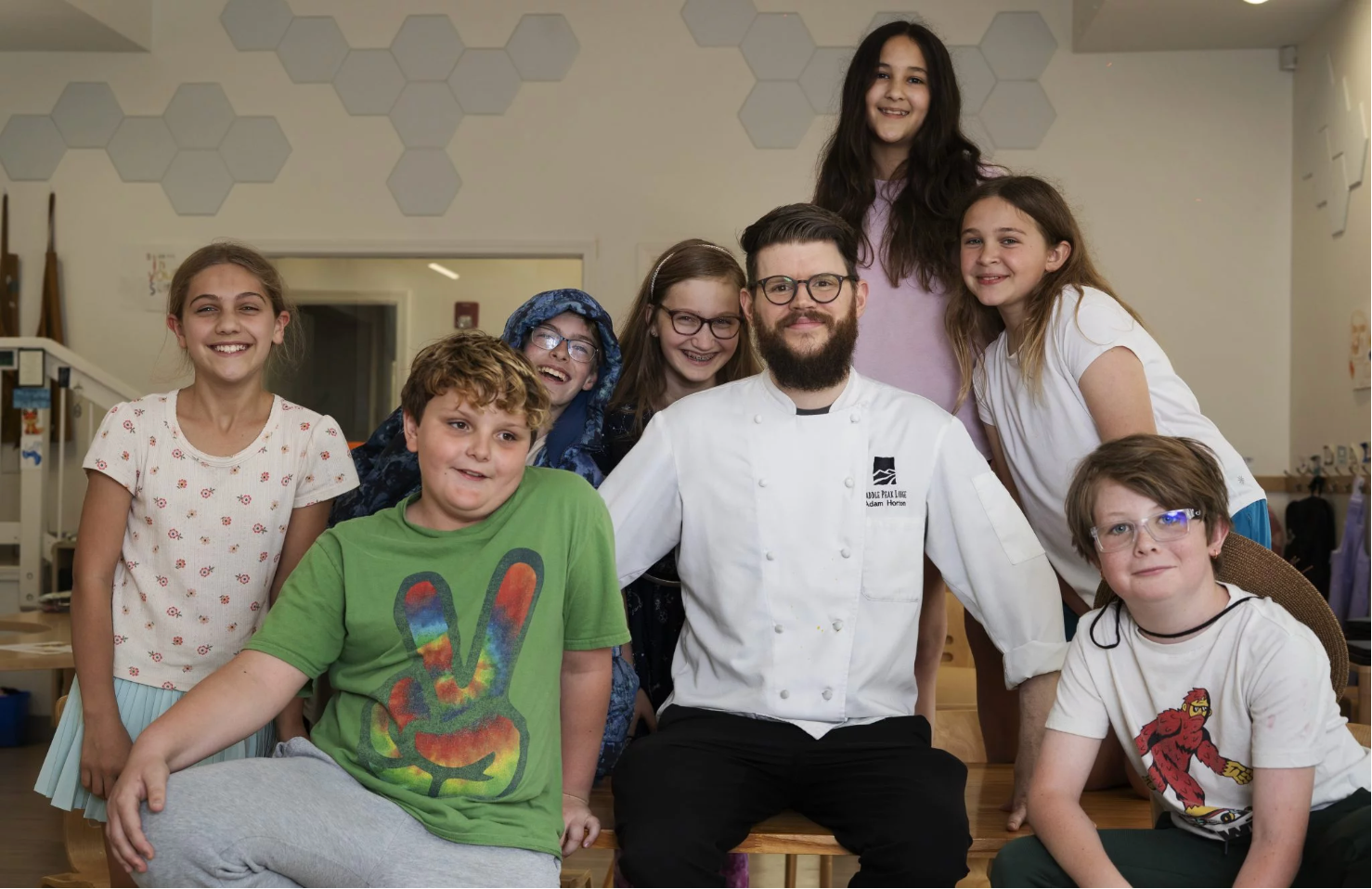
In 2021, the private school brought on Chef Adam Horton, a world-renowned Michelin Star chef who was looking for a change of pace. Now, students expect sauce with every meal — a distinctly French fine dining occurrence — and eat their meals on glass plates.
Horton left a job fixing printers to attend Cordon Bleu’s California School of Culinary Arts in 2000. He then found work at renowned Los Angeles restaurant Saddle Peak Lodge, which became his on-again-off-again home for the next 20-odd years. Horton says that early on he struggled in the kitchen, but a year of learning sent him skyrocketing through the ranks of his peers. When Saddle Peak Lodge’s Executive Chef, Warren Schwartz, who Horton says is still his biggest mentor to this day, left, Horton followed him, going on a world tour to learn more about the industry and hone his skills.
Over the course of 15 years, Horton staged in France, worked at Gordon Ramsey’s three Michelin star restaurant in London and was a part of the massive machine of Wolfgang Puck’s Spago in Las Vegas. Horton also went on to work in Thailand, where he got his first practice at cooking for children at a monastery orphanage with over 1,000 residents.
“It was crazy,” Horton said regarding his many culinary encounters over the years. He remembers the week an Executive Chef brought in a Boeing Executive to teach him the ins-and-outs of managing a big team. “It's just experiences you're not supposed to have happen.”
In the middle of his travels and growth as a chef, Horton came back to Saddle Peak as a sous chef. When the position of Chef de Cuisine opened up, he took the initiative to talk the owners into giving him a chance. When he took the reins, Horton led the restaurant to a Michelin Star. He stayed in this role for seven years before pivoting to manage the front of house operations.
Covid hit the restaurant industry hard, as did the autoimmune disease that Horton was diagnosed with around the same time. He knew the restaurant lifestyle — which had him working nearly 100 hours a week and missing 18 family Thanksgivings — was no longer the right path for him.
“I knew I didn’t want to do restaurants again,” Horton said. “It’s too much on the body and the soul.”
This need for a change in pace coincided with Horton’s wife’s search for a medical school program. Columbia felt like a great fit for the pair.
After nearly 20 years of working almost exclusively in Michelin Star restaurants, the very peak of dining and food service, his peers warned that Horton wouldn’t fit in in small-town Missouri. There were no big opportunities or outlets for his creativity and skill level.
Then, he found Atelier.
The school, which combines the Montessori Method with other teaching philosophies for students aged two through seventh grade, was hiring a chef. Horton says he emailed a two page long letter to the school’s founder, Kara Hook, asking her to give him a shot despite his resume that may have shown him to be highly overqualified.
“Five years ago, I wouldn’t have been able to imagine doing this,” Horton said. “Now I can't imagine not doing this.”
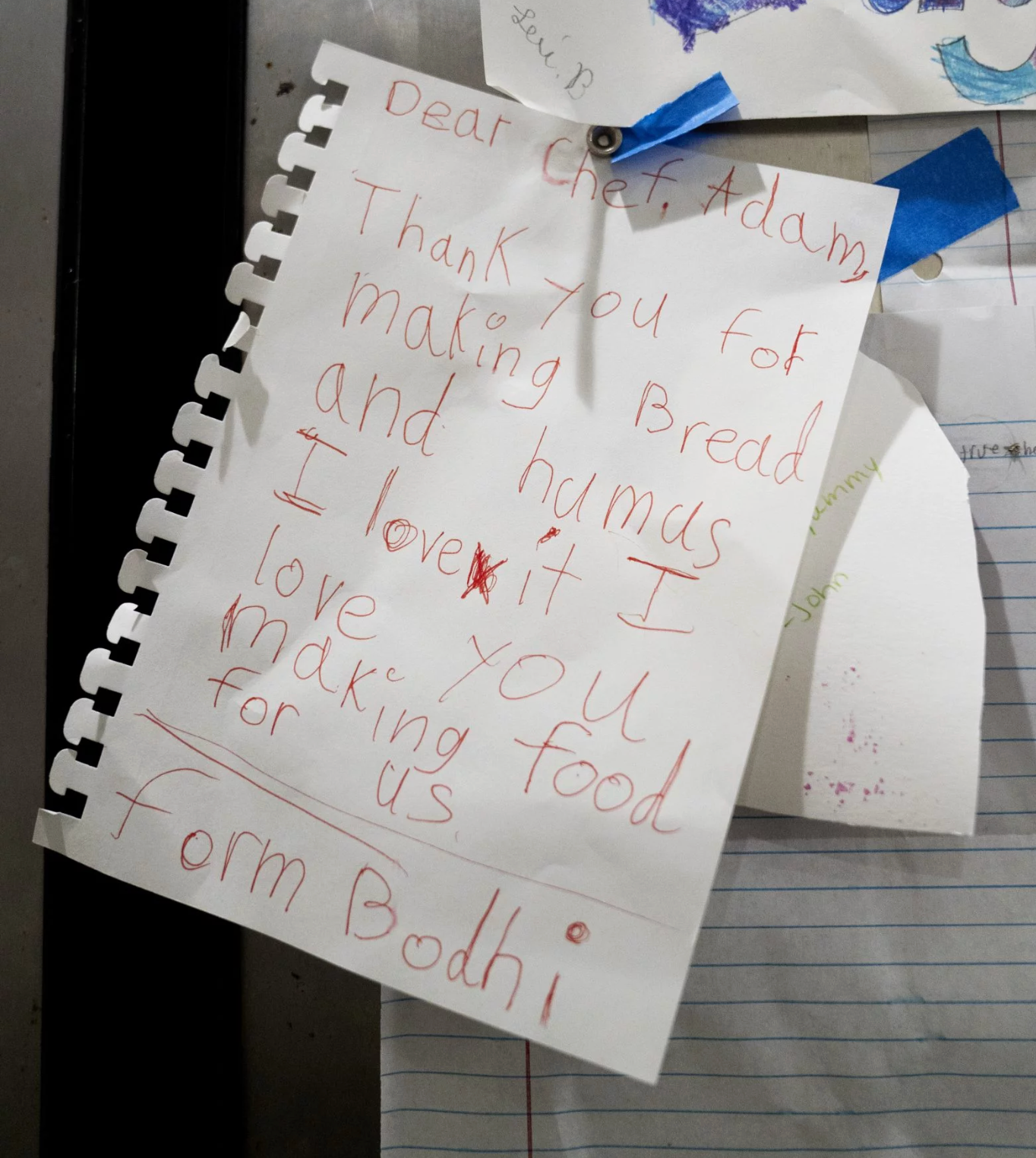
In the three years since Horton started working at Atelier, he says he’s developed a trust with his students that flows both ways — he trusts their opinions, feedback and taste buds. They trust him to serve tasty food.
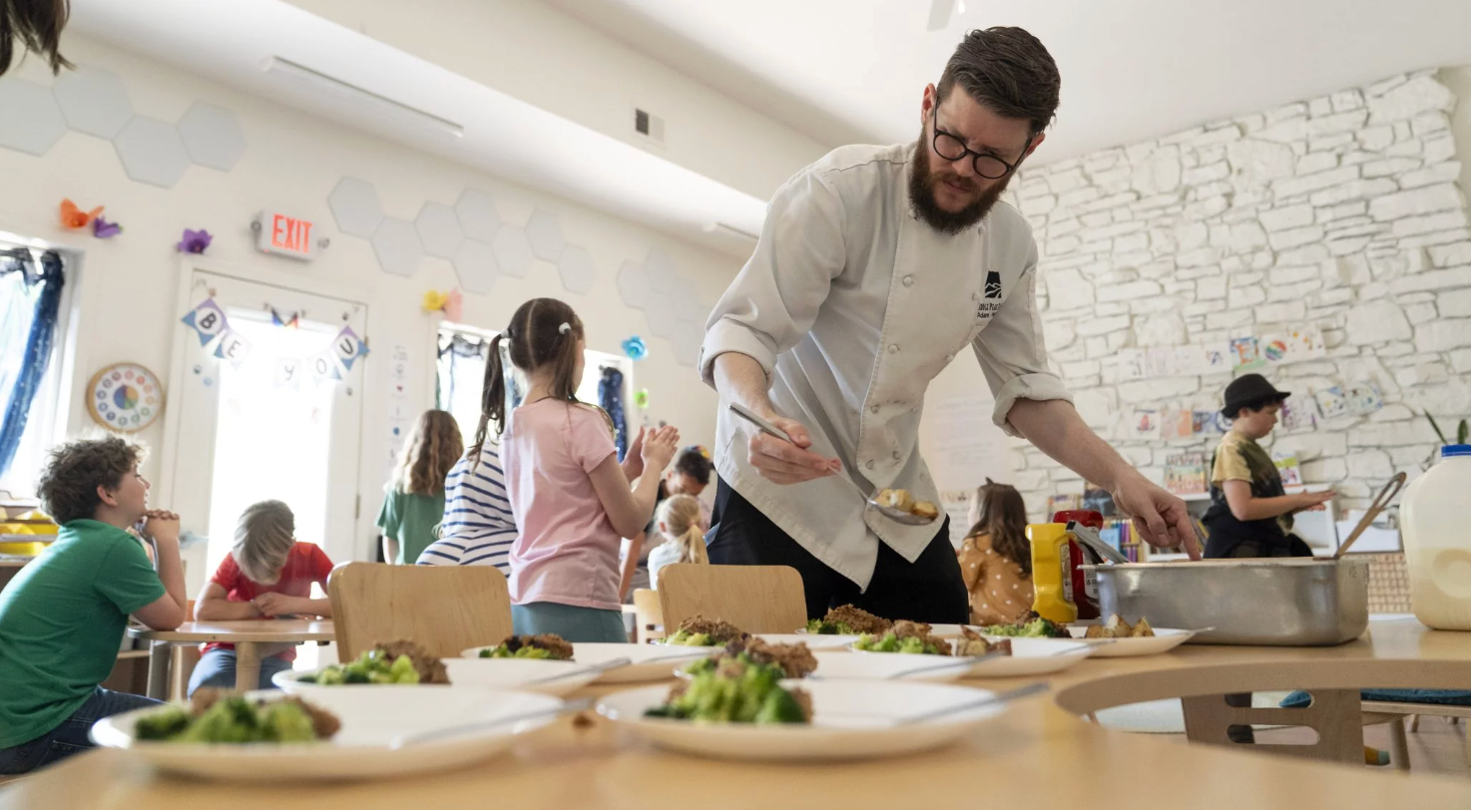
Horton works hard to not make the food he serves to the school’s 200 students and faculty too “chef-y” while still maintaining a level of diversity. Students can expect a wide array of worldwide flavors they may not be able to get at home. There are a few staples, like teriyaki chicken and bulgogi bowls, that parents say their children beg for at home, though nothing from the grocery store is able to replicate what they get at school.
Prominent on his to-do list is the optimization of the nutrients students are getting daily to ensure the best possible learning environment and experience. Horton has studied clinical nutrition and knows that getting the right ratio of protein and vitamins in his meals can have a huge effect on their school day.
Nevertheless, there are still some things that even a Michelin Star Chef can’t convince a kid to eat.
“I had a lot of dreams of getting (the students) to eat a million vegetables, and they only eat steamed vegetables to this day,” Horton said.
Meals are served to students in big pans, family style. School Director Holly Linneman says this is an integral part in the community-first nature of the school, allowing students to connect with their peers and teachers over food.
Horton has drawn inspiration from the best restaurants in the world, but often reflects on the family meals he ate and prepared at Saddle Lodge. These meals were often eclectic and diverse, and Horton says that is exactly what he goes for at Atelier.
“This is how you should feed people,” Horton said.
Despite the extreme differences in environment compared to his earlier career, Horton says that a lot of the same principles have carried over. Getting a meal out on time is just as, if not more, important with a horde of hungry second-graders as it was in a fine dining establishment.
The slower pace and fewer hours associated with the job have allowed Horton to finally develop hobbies and breathe in his personal life. He says he’s “able to live now,” as opposed to the survival-mode he was stuck in for his years in the stress of the fine dining world. He paints to continue his artistic expression now that his cooking is more streamlined. Horton says that when he thinks about work on his time off, it’s because he wants to.
Regarding the effort he puts into the school, Horton says he works because he cares about the students and he knows he’s reaping the benefits, too. “Being here is important to me,” Horton says.
Where his sleepless nights used to be filled with dread about high-stress management decisions, he can now think about his kitchen in a positive light, excited to discover the ways he can make the school a better place.