
Maria's Cows
As a head milker at Foremost Dairy, Maria Poock’s job could be as easy as clocking in at 1:00 P.M. and clocking out at 9:00 P.M. after the evening milk shift is over. She would spend her days feeding out hay, fixing tractors, repairing fences, and the other quintessential farmhand jobs. However, Poock has taken responsibility for the dairy farm’s massive calving operation that runs year-round, which means she is often on-call for overnight calvings, administers vaccines and bottled colostrum for newborn calves and handles all logistics regarding the youngest members of Foremost Dairy. In addition, she takes on student-workers and helps teach classes at the farm, guiding students whose exact shoes she was in not too many years ago. She goes above her job description and beyond what her superiors ask of her, and in return Poock has earned a sense of ownership over the calving world.
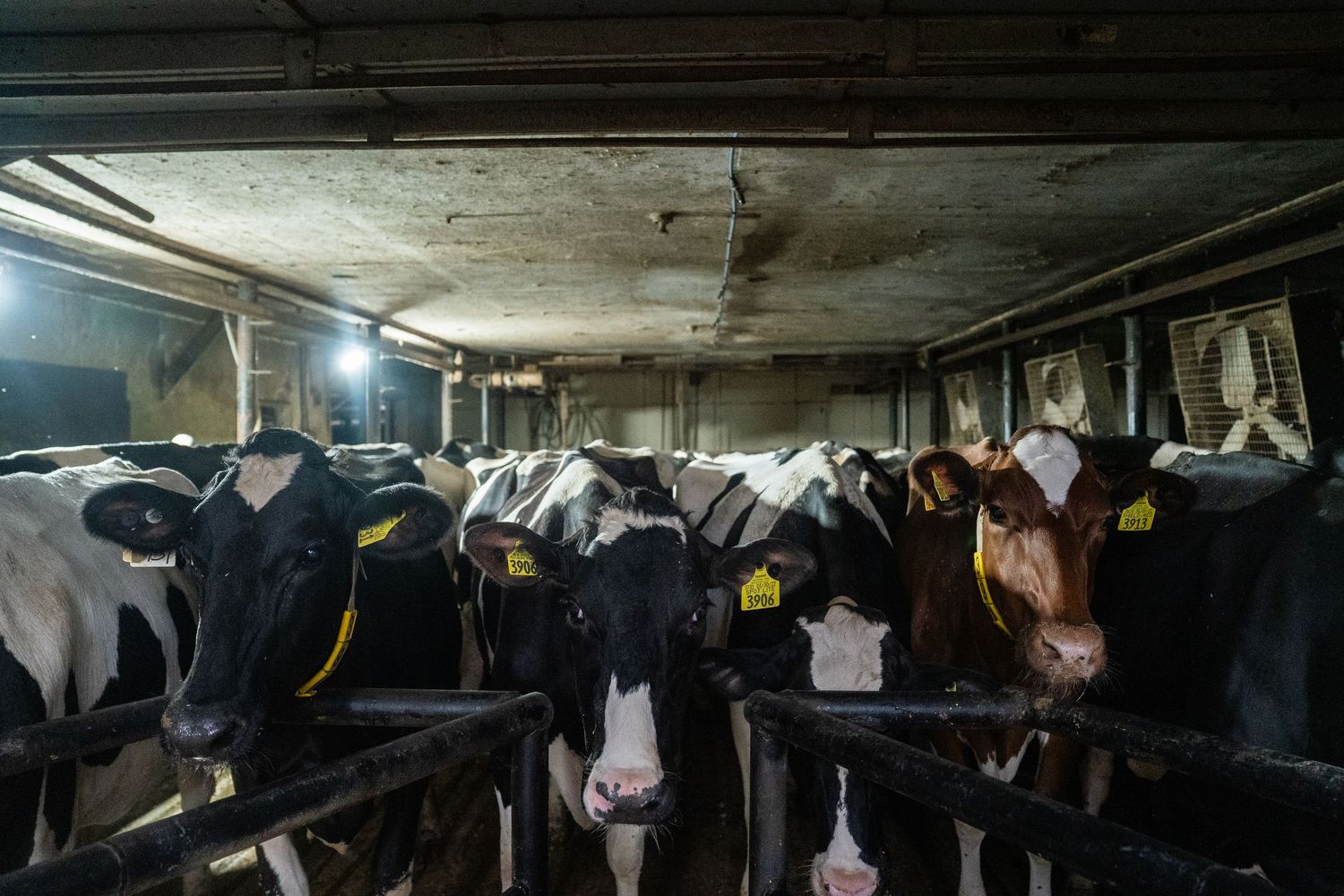
Dairy cows await their turn to be milked on Sept 4, 2025. They are milked by the staff at Foremost Dairy twice a day, and their morning session has usually concluded by the time the sun rises.
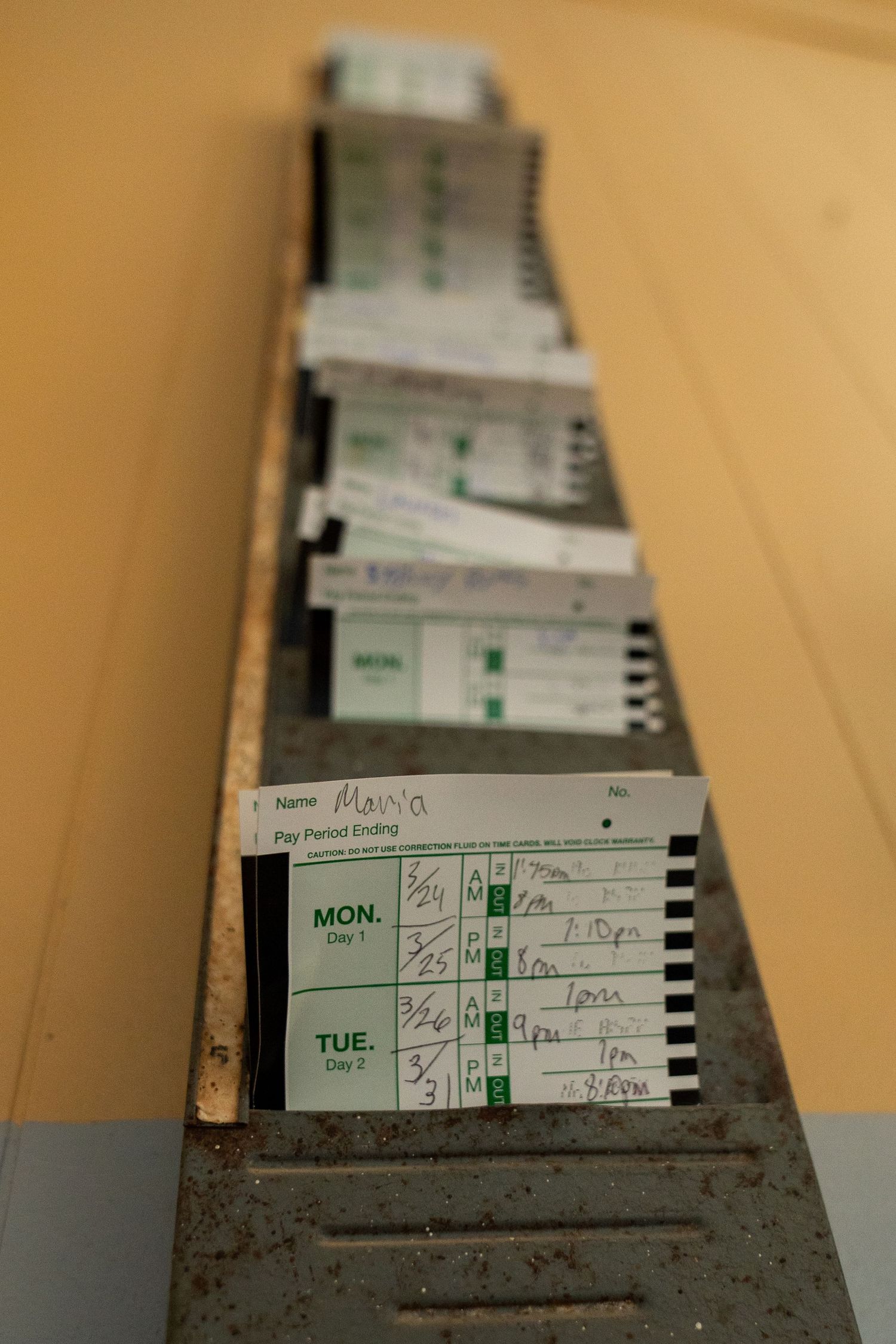
Maria Poock’s time punch card rests in its container in the office of Foremost Dairy. While Poock is technically employed as a “lead milker” she takes ownership over all calving operations, including pre and postpartum care of cows and bottle feeding, vaccinations, and upkeep of young calves.
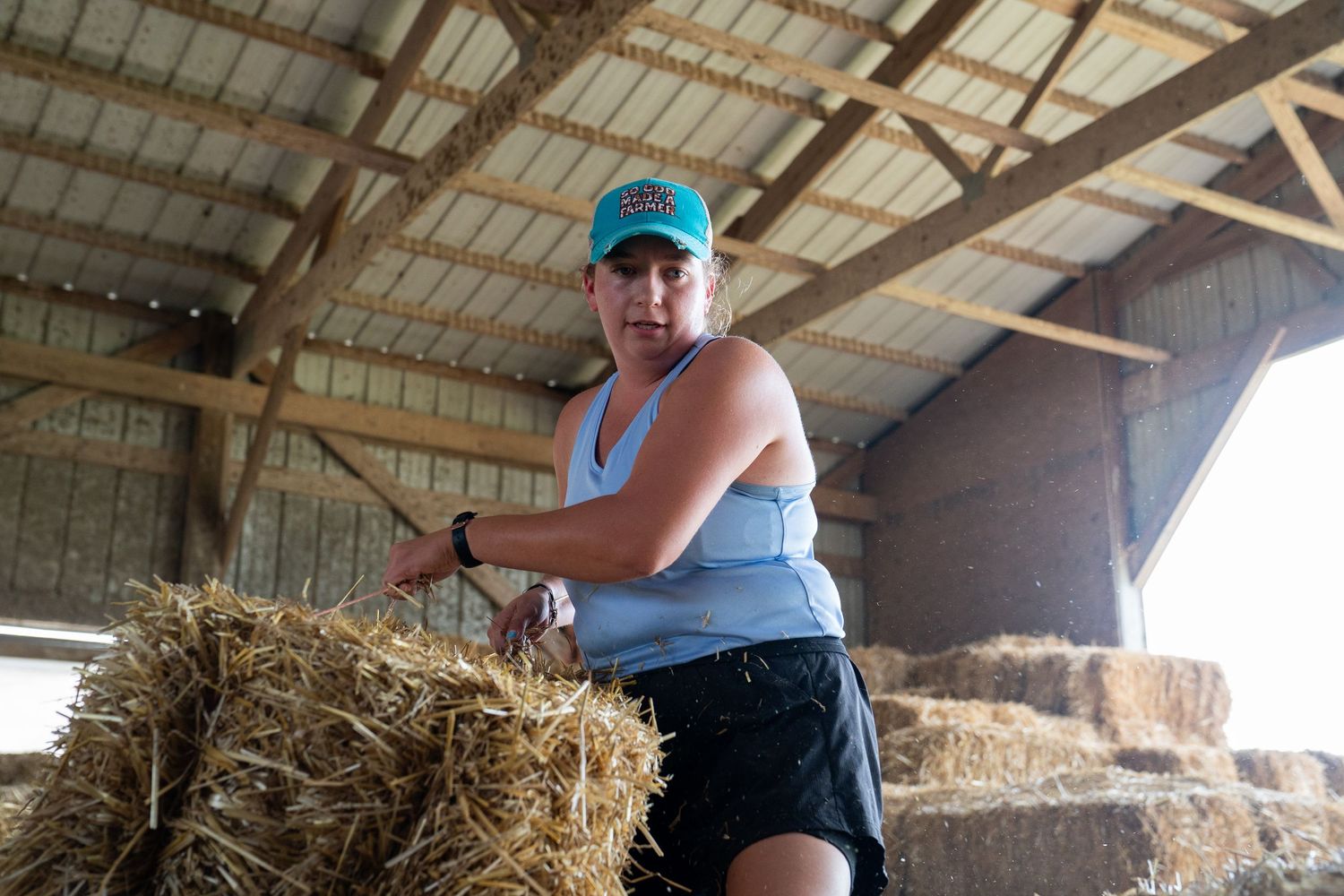
Maria Poock throws a straw bale onto a truck to be used as bedding for calve hutches after a big rain on Sept 16, 2025. Because of how dry the late summer was, many of the calves on site have never had their enclosures rewedded, and Poock was amused to find them spooked by the straw, only to be rolling around in it a few minutes later.
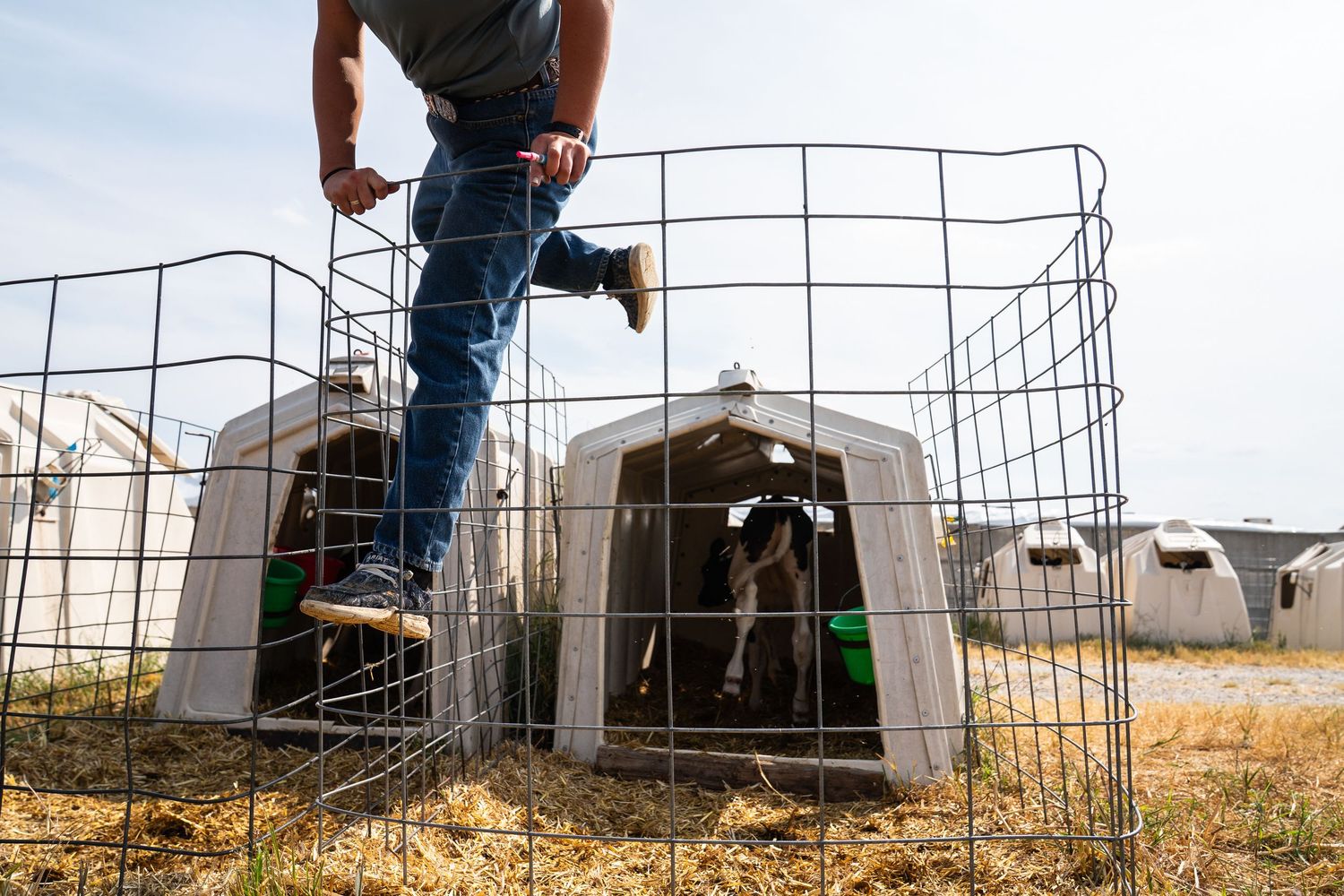
Maria Poock climbs into a dairy calf hutch to administer eight-week vaccines. With her are student workers that help to draw up and record the vaccinations. Poock says that when she has pre-vet students with her, she teaches them how to administer the vaccines and hands the job off to them (after all, she admits its not her favorite part of the job). For this vaccination session, though, no students were interested in learning, so she completed the tasks on the ten youngest calves on the property.
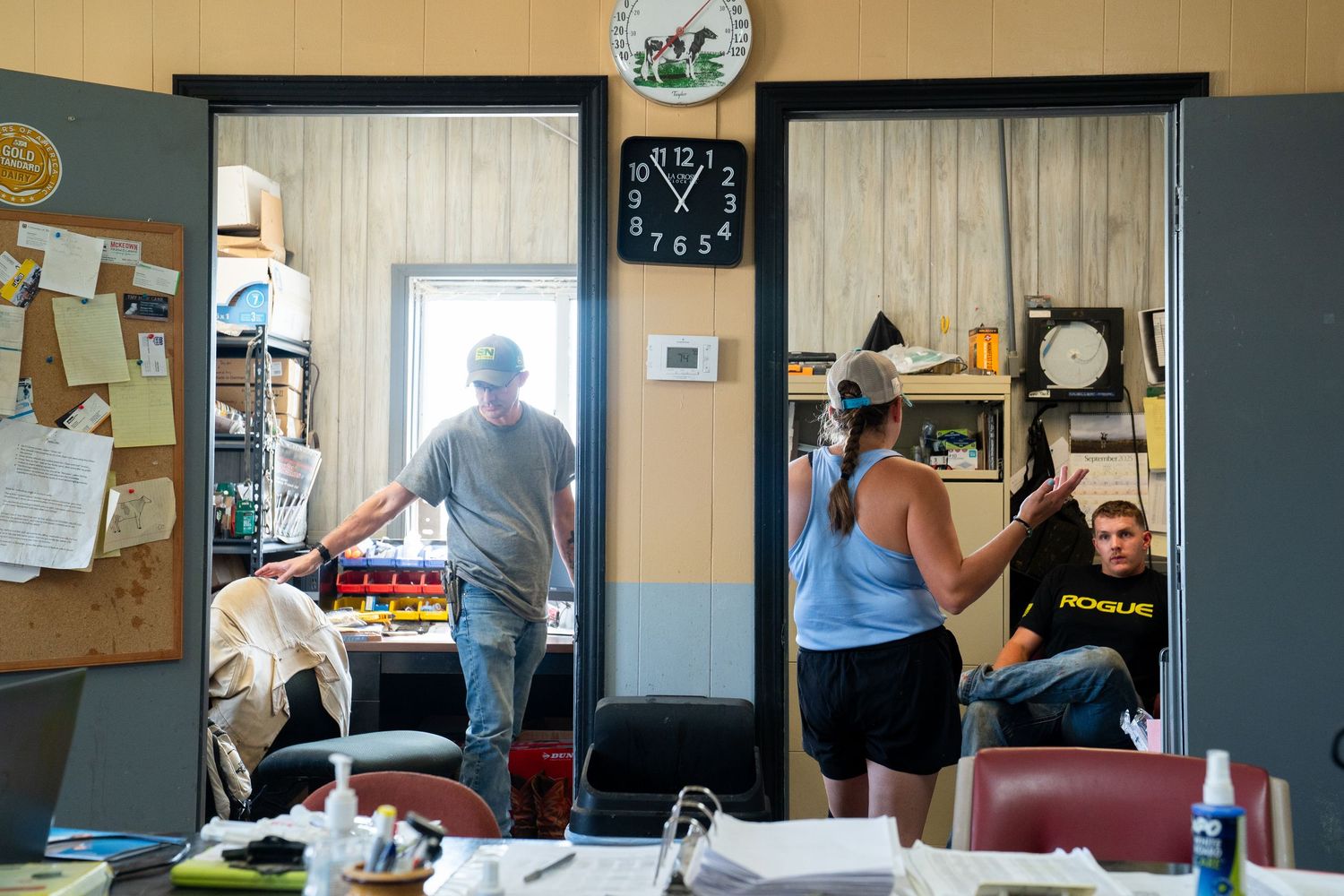
Maria Poock discusses milking schedule changes with farm manager Drew Edwards and fellow lead milker Will Tackett on Sept 16, 2025. The group is facing low numbers of students interested in milking, which puts heavier than usual workloads on Poock and Tackett, who split the job. The group is considering changing milking times to increase the amount of students willing to participate and the chance of catching calvings happening in the evening while Poock is still onsite.
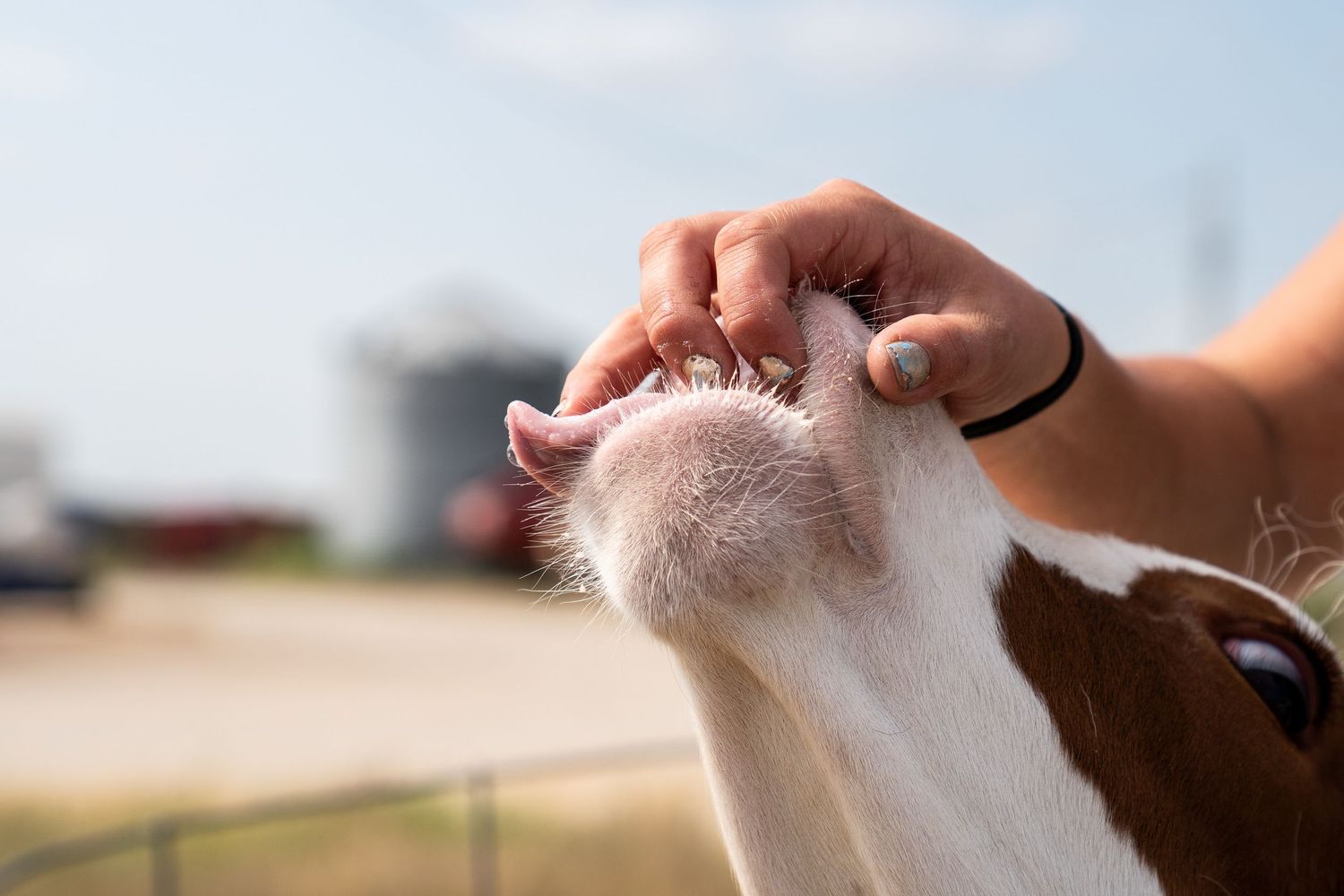
A young dairy calf suckles at Maria Poock’s fingers at Foremost Dairy. The farm - as is standard in dairy cattle operations - bottle-feeds their calves completely separate from their dams, both for optimum milk production and for calf safety, since maternal instincts have almost entirely been bred out of dairy cows. Calves therefore misplace the natural suckling reflex, which Poock happily allows while administering vaccines.
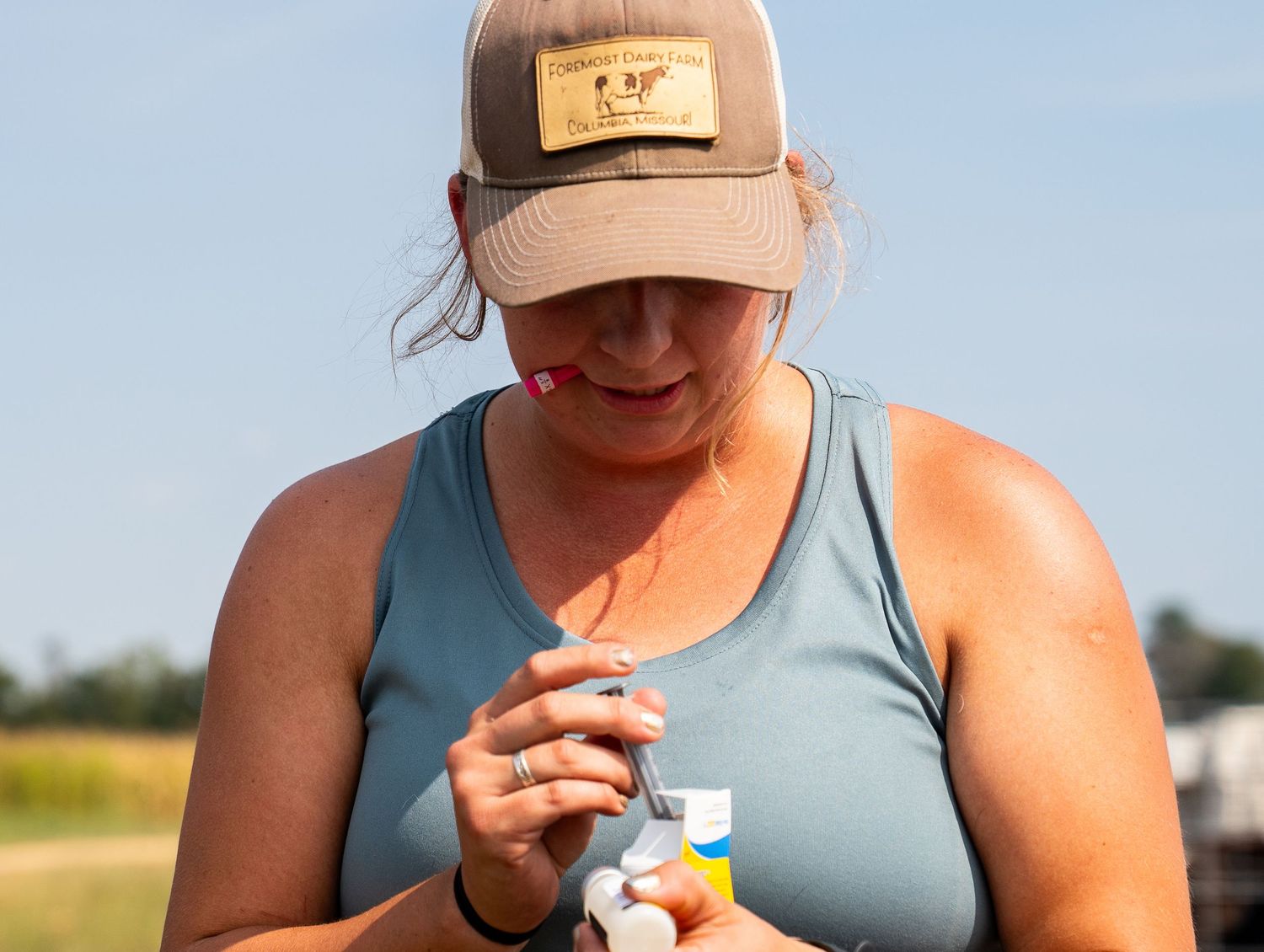
Maria Poock draws up a Clostridial vaccine, which is an eight-way vaccine that prevents young calves from getting a series of deadly illnesses.
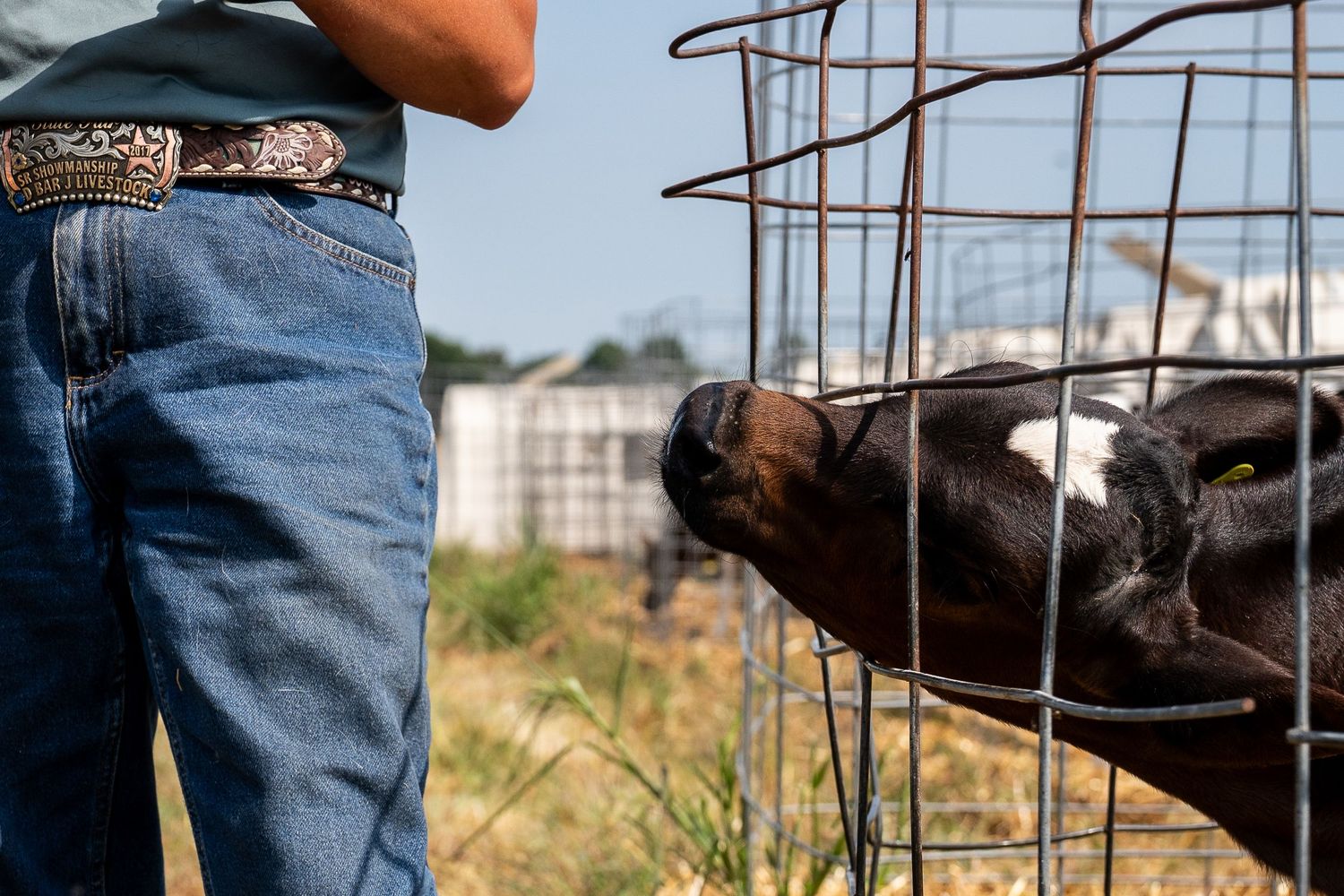
A young dairy calf reaches towards Maria Poock at Foremost Dairy. The farm - as is standard in dairy cattle operations - bottle-feeds their calves completely separate from their dams, both for optimum milk production and for calf safety, since maternal instincts have almost entirely been bred out of dairy cows. Calves therefore misplace the natural suckling reflex and often push the limits of what they are taught as “barn manners” by licking, suckling, and pushing their face close to humans.